There's a conversation I've had more times than I can count. A food manufacturer brings in an automation provider — someone with a solid portfolio — and things look promising on paper. They've done complex systems. They understand robotics. They know how to manage a complex project.
Eighteen months later, the line isn't running. Or it's running, but it can't survive a sanitation cycle. Or the robotic cell was built without considering allergen zone separation. Or the OSHA risk assessment was done to general industry standards rather than ANSI R15.06.
The problems aren't always catastrophic. But they're expensive, they're time-consuming, and almost every one of them was preventable — if the contractor had actually understood the food environment before the project started.
Food Is Its Own Category
Automation is automation in the sense that conveyors convey and robots pick regardless of what's on the line. The equipment physics don't change. What changes is everything around the equipment — the operating environment, the regulatory requirements, the sanitation exposure, the product handling constraints, and the long-term performance expectations.
A contractor who has spent their career in automotive knows how to build a precision robotic cell. What they may not know is that the same cell, built to automotive standards, will harbor bacteria in food service if the frame design creates dead zones that can't be cleaned. They may not know that the stainless steel spec appropriate for an automotive environment is inadequate for a wet sanitation protocol in a meat processing facility.
These aren't edge cases. They're the baseline requirements of food manufacturing, and they shape every design decision from day one.
The Compliance Stack Is Layered and Specific
Food manufacturing automation sits under multiple regulatory and standards frameworks simultaneously. Getting one right while missing another creates liability that doesn't show up until an audit, a recordable incident, or a warranty dispute.
A contractor who can't speak fluently to all five of these isn't equipped to design automation for your plant. They may be able to get the equipment running. They may not be able to get it running in a way that passes your next audit, survives your sanitation protocol, or protects your team.
Sanitation Is a Design Input, Not an Afterthought
This is where projects fail the most quietly. A contractor who doesn't understand food environments designs equipment to functional specifications — it runs at rate, it handles the product, it fits the floor space. What they don't do is design for how the equipment will be cleaned.
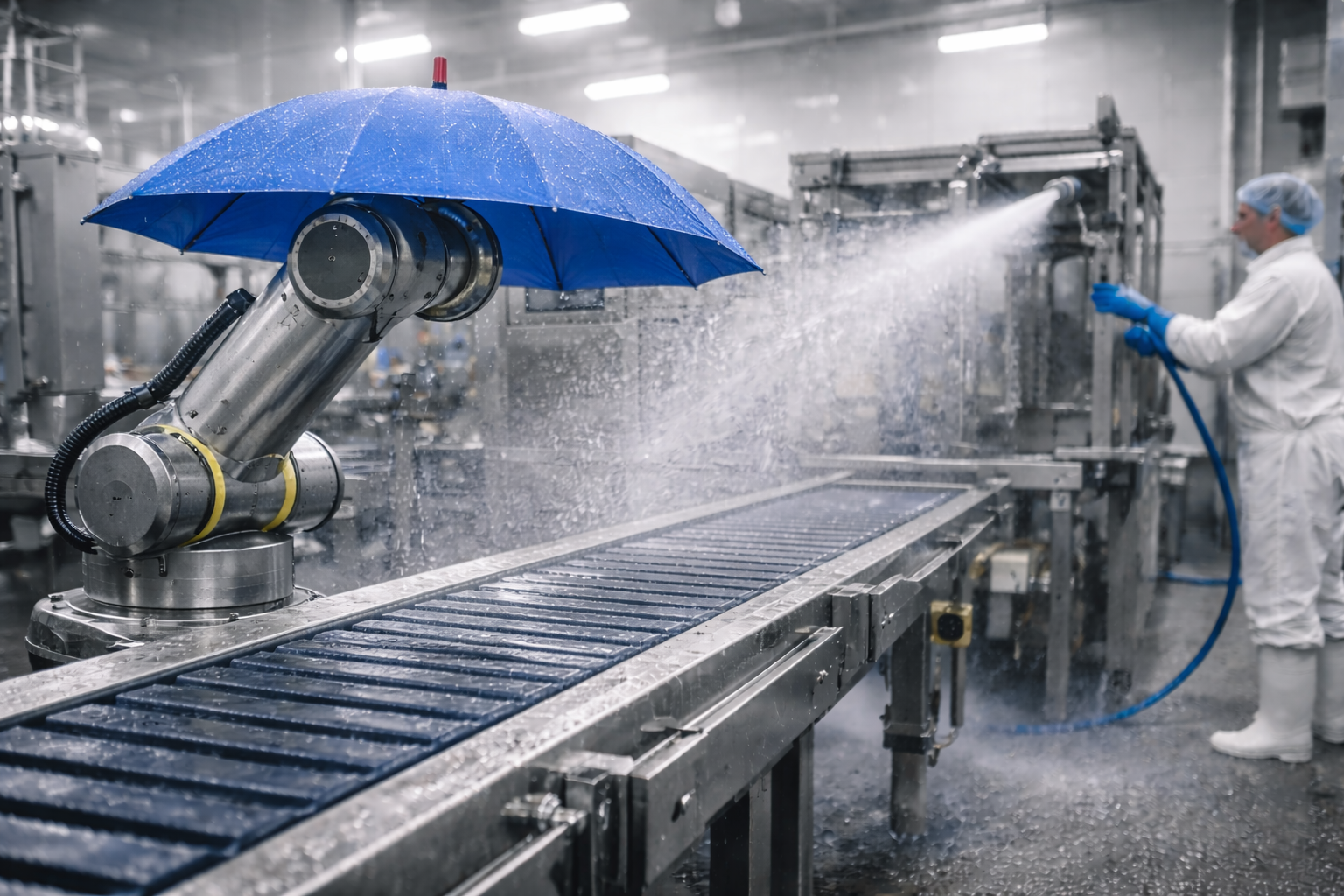
In a food plant, sanitation is a daily or weekly process that involves high-pressure water, chemical sanitizers, and temperature variation. Equipment that isn't designed for this environment will corrode, harbor contamination, and fail prematurely. Electrical enclosures that aren't rated for washdown environments will fail. Bearings that aren't sealed for wet environments will deteriorate. Frame designs that create horizontal surfaces or hollow sections will harbor bacteria that your sanitation team can never fully reach.
The fix for most of these problems is straightforward — at design stage. After installation, it's a major project. The question is whether your contractor knew to think about it before the equipment was built.
Allergen Zone Separation Has Physical Implications
In facilities that run multiple protein types or allergen-containing products, the physical separation of allergen zones isn't just a process policy — it has to be built into the equipment layout. Cross-contamination pathways created by shared conveyors, air flow patterns, personnel movement routes, and shared equipment surfaces are a design problem, not just an operational one.
A contractor without food experience often doesn't think about allergen zone separation as a layout constraint. They're optimizing for throughput and equipment fit. The allergen separation conversation either happens very late — when it's expensive to change — or doesn't happen at all until an audit catches it.
What to Ask Before You Hire
When you're evaluating an automation contractor for a food plant project, the baseline questions should include:
- What USDA/GFSI-regulated facilities have they designed automation for previously?
- Have they performed ANSI R15.06 and ISO/TS 15066 risk assessments on their own projects, or do they subcontract that?
- Who specifies the electrical equipment, and are they familiar with NFPA 79 requirements for food environments?
- How do they approach hygienic equipment design and sanitation review in their equipment specs?
- What happens when an OEM's standard offering doesn't meet food plant requirements? Can they write a spec and drive the OEM to modify it?
The right contractor will answer these questions specifically, not generically. They'll be able to name the facilities, describe the compliance challenges, and explain the decisions they made. If the answers are vague or pivot quickly to general capability statements, that's a signal worth paying attention to.
The Cost of Getting This Wrong
A failed automation project in a food plant isn't just a capital loss. It's potential regulatory exposure, operational disruption during peak production, and — depending on what went wrong — product safety risk. The indirect costs almost always exceed the direct ones.
The investment to get this right is doing proper due diligence at the start: a qualified engineering feasibility study, a contractor with actual food manufacturing experience, and a structured project process that identifies compliance requirements before a single piece of equipment is ordered.
That's not a complicated bar to clear. But it does mean being deliberate about who you bring into your plant.
Zack Lynch is a Project Management Professional and founder of Next Tech Automation, specializing in complex automation projects for food manufacturers. With a compliance framework built across USDA, OSHA, RIA/ANSI, and NEC requirements, Next Tech delivers automation that performs — and passes your next audit.